
Fire Protection in the Northern Territory: Your Questions Answered
If you run a commercial site in the Territory, here's the question worth asking: when was your fire protection equipment last serviced, and do you actually know?
TEC Fire looks after fire protection compliance for sites across Darwin, Katherine and remote NT. We asked Co-Director Ryan Smith what businesses actually need to know about keeping their fire protection compliant, and what happens when they don't.
When do businesses typically reach out about fire protection?
“They'll either have an existing fire panel and alarm that needs servicing, or they want a new contractor because they're not happy with response times or communication,” Ryan says. Sometimes TEC picks up work when a business's current provider is based interstate and difficult to get hold of. Other calls are simpler: fire extinguisher stamping, detector servicing, or fire panel maintenance.
“That's where our building management service comes in too,” Ryan says. “We might already be monitoring a client's BMS for air conditioning, so it makes sense to look after their fire protection at the same time.”
What makes fire protection in the NT different from other states?
The core requirements are the same nationally: fire extinguishers need servicing every six months, fire panels every month. What's shifting in the Territory is enforcement. The NT Fire Protection Agency has been working with NT WorkSafe to tighten compliance, closing a gap that's historically been looser than southern states.
What does a typical fire protection job involve?
It depends on the site. TEC recently completed a full compliance audit for a group of recycling centres, working through evacuation plans, mustering points, emergency lighting and portable fire equipment across their sites, standard scope for a workshop or shed without a fire panel.
Sites with a fire panel carry more obligation. TEC's ongoing work for the North Australian Aboriginal Justice Agency (NAAJA) is a good example: scheduled servicing of fire extinguishers, hose reels and fire blankets across the Yarrawonga Village, Katherine and Darwin sites every six months, plus monthly testing and annual inspection of the Darwin site's 9-zone Fire Indicator Panel, with a scheduled 5-yearly overhaul and 6-monthly hydrant inspections.
What fire protection work requires specialist expertise?
A qualified electrician can legally maintain fire equipment, but installing anything connected to a fire panel requires a restricted electrical licence. The bigger gap, Ryan says, is confidence and legislative knowledge, not technical ability.
Judgement matters too. During a routine inspection of a commercial kitchen, TEC found a generic fire extinguisher stationed next to a large oil cooker. It was technically compliant, but not right for the risk. The recommendation was a wet chemical extinguisher, designed specifically for oil fires. “It's not just about ticking boxes,” Ryan says. “It's about actually protecting people and property.”
What risks come with taking on a fire panel contract?
Responsiveness. If a fire panel goes into alarm, the fire brigade attends first, inspects, and isolates the zone, then follows up the next day to confirm the issue has been fixed. A contractor who can't respond fast puts the client's reputation and compliance record at risk.
What surprises most businesses about fire protection requirements?
How regularly it needs to happen. Landlords and tenants are often surprised that extinguisher servicing and emergency lighting checks are a six-monthly requirement, not a one-off. If you're leasing a building, someone needs to own that responsibility, because non-compliance can affect insurance and create liability.
How does the wet season affect fire systems?
Moisture builds up in terminations, which can trigger false alarms. Regular maintenance prevents it. False alarms caused by poor maintenance aren't just inconvenient, the NTFRS can charge for the callout, with fines reaching up to $25,000 for repeated or serious incidents.
What are the real consequences of non-compliance?
Fines, reputational damage, and in serious or repeated cases, a business can be shut down until issues are fixed. Underneath all of that is the more basic risk: a system that doesn't work when it's needed.
Does TEC service remote NT locations?
Yes. TEC holds an ongoing AS1851 compliance contract for Evolve FM at Jabiru Field Station, travelling monthly to service the site's fire protection assets, including 24 fire extinguishers, 2 fire blankets and 3 hose reels on a 6-monthly cycle, monthly and annual servicing of the fire pump and sprinkler system, and annual function testing of the Fire Indicator Panel and Onsite Warning System. TEC manages all travel and logistics to deliver full compliance servicing to the remote site. The same approach extends to Alice Springs, Tennant Creek and other regional centres.
Why choose a local provider like TEC for fire protection?
You speak to someone who knows your site, not an answering service interstate. TEC also delivers building maintenance and industrial electrical services, so clients like SMEC, whose Darwin office receives scheduled fire extinguisher and emergency lighting servicing under AS 1851 and AS/NZS 2293, get one accountable provider instead of several.
Fire protection servicing often runs alongside broader site upkeep. See our Preventative & Corrective Maintenance services for scheduled electrical maintenance across the same sites.
Not sure if your fire protection systems are fully compliant? Call Ryan directly or speak to one of TEC Fire’s compliance experts, no obligation.
Phone: (08) 8968 9484 | Email: info@tecfire.com.au | Web: tecfire.com.au
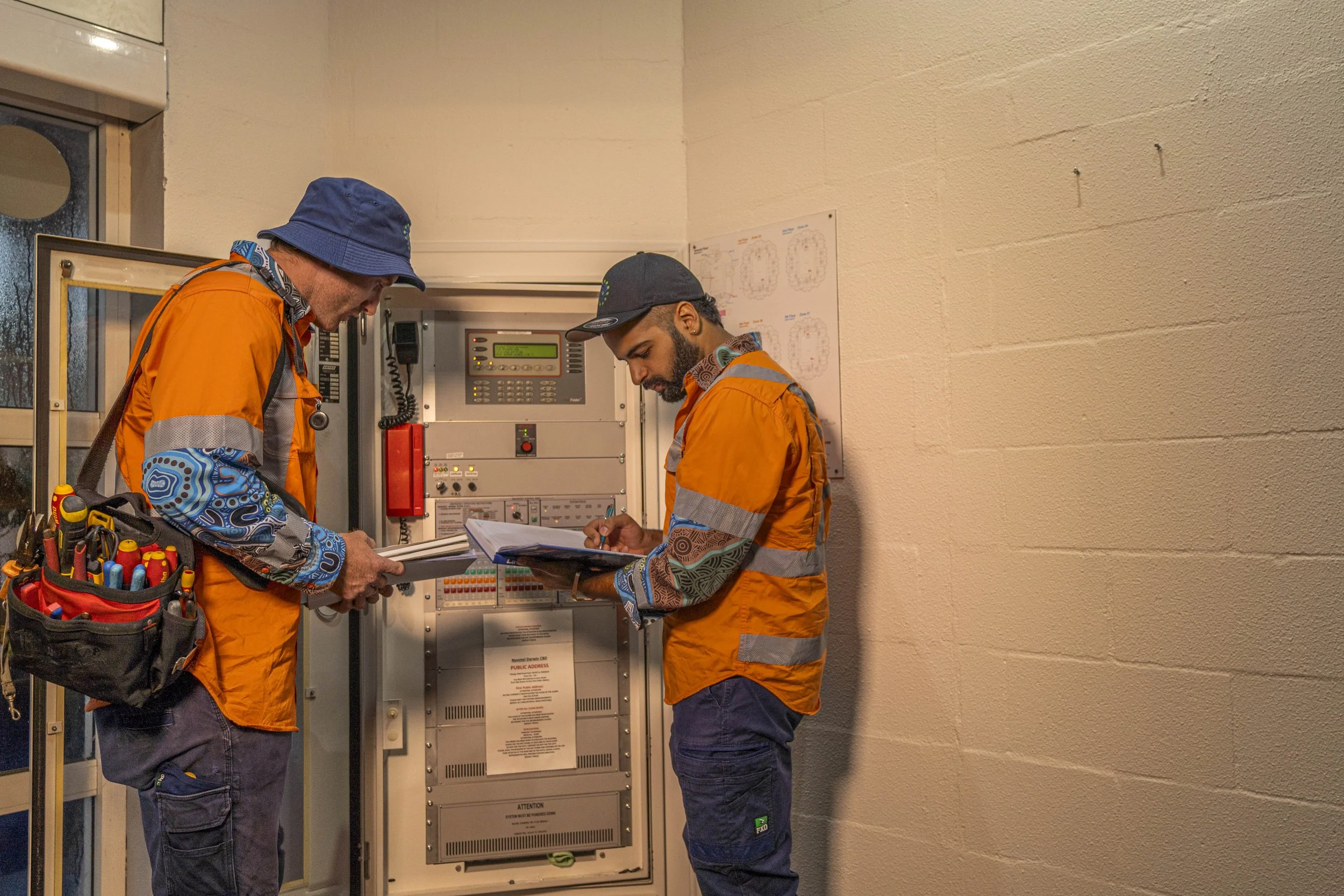
TEC Fire’s experienced team testing a fire panel